The town of El Cobre in the eastern province of Santiago de Cuba was one of the hardest hit by hurricane Melissa in October 2025. Home to some 7,000 people, it is also the site of the Basilica of Our Lady of Charity, the patron saint of Cuba.
The hurricane made landfall in eastern Cuba on October 29 about 20 mi (30 km) east of Chivirico, with sustained Category 3 winds of 120 mph (195 km/h). No deaths were reported after the Civil Defense evacuated more than 735,000 people across eastern Cuba ahead of the storm. Residents were slowly starting to return home as of November 1. Heavy equipment began to clear blocked roads and highways and the military helped rescue people trapped in isolated communities and at risk from landslides.
The Conference of Catholic Bishops of Cuba called Melissa’s impact “a catastrophe of enormous proportions” and noted that this disaster adds “to the already difficult daily reality of our people.”
The prelates asked for “everything” for the victims: food, clothing, mattresses, household items, and shelter, “especially for the many elderly people living alone and all those who are naturally experiencing this time with sadness and discouragement.”
Finally, they appealed for solidarity “from Cubans in other parts of the world and throughout the country, to all those who with goodwill want to and are able to help us.”
Story courtesy of Catholic News Agency ( first published by ACI Prensa, CNA’s Spanish-language news partner. It has been translated and adapted by CNA.
As announced in 2023, World Youth Day 2027 will be held in Seoul, South Korea. Pope Leo XIV has set the dates to be August 3 through 8, 2027 and the theme is “Take courage! I have overcome the world.” (John 16:33).
South Korea has experienced a remarkable transformation from poverty to prosperity…..from authoritarianism to democracy. It went on to become an economic powerhouse in Asia. For example, imports from South Korea to the U.S. totaled $131.5 billion in 2024. China draws that figure at $438 billion, but it is still a large amount for such a small country (the population of China, at 1.4 billion, is roughly 27 times the population of South Korea).
South Korea represents a unique blend of faith, culture, and global influence, making it a fitting location to host World Youth Day that can help bridge the gap between the Global South and the Global North, as well as between East and West
The Catholic Church in Korea is vibrant, although it is still a minority religion, with about 11% of the population, it is characterized by its harmonious coexistence with diverse religious traditions. Unlike many other Asian countries, Korea was not colonized by Western imperialist powers; instead, it was colonized by Japan, an Asian imperialist power, in the first half of the 20th century and ruled the country until the end of World War II in 1945.
Pope John Paul II visited South Korea twice. His first visit was in 1984 to commemorate the 200th anniversary of the Korean Catholic Church, during which he canonized 103 Korean martyrs. His second visit was in 1989 to attend the 44th International Eucharistic Congress.
Crowds at Pope Francis’ visit to South Korea 2014
Pope Francis visited South Korea in August 2014 as part of the 6th Asian Youth Day, marking his first trip to Asia.
The Mass celebrated by Pope Francis in Daejeon drew an estimated crowd of 800,000.
South Korea, particularly Seoul, is seen as a gateway to East Asia, and those organizing and hosting World Youth are expecting a “radiant beacon of unity embracing the rich culture of East Asia”.
The event provides an opportunity to showcase Korean culture and faith to the world.
The location has geo-political implications as well, since the Communist government of North Korea (backed by Communist China) will certainly be dis-pleased at such an event on their doorstep. The de-militarized zone between North and South Korea remains a potential flash point, and it should be remembered that the Korean War ended with an armistice on July 27, 1953. An armistice is a formal agreement to stop fighting, but it doesn’t necessarily signify the end of a war. It’s a ceasefire that allows for negotiations towards a lasting peace, but in the case of Korea, those negotiations have never resulted in a peace treaty.
If the crowds at the 2025 “Pilgrims of Hope” Youth Jubilee 2025 in Rome are anything to go by (over one million in attendance), this will be a huge event. Even secular news sources like the Associated Press (AP) and CBS News noted the enthusiastic participants in the Youth Jubilee 2025.
These events inspire us to have an optimistic outlook for the future of The Church.
Israel said Thursday that it “deeply regrets” a deadly strike on Gaza’s only Catholic church, the Church of the Holy Family, which killed three people. The Israel Defense Forces acknowledged it hit the church “mistakenly“.
The Latin Patriarchate of Jerusalem, which has jurisdiction for Roman Catholics in Gaza, said the Holy Family Church was struck by Israel on Thursday morning. The church has become a shelter for the enclave’s tiny Christian community amid the 20-month war.
The office of Israel’s Prime Minister Benjamin Netanyahu said that “Israel deeply regrets that a stray ammunition hit Gaza’s Holy Family Church. Every innocent life lost is a tragedy.”
“Israel is investigating the incident and remains committed to protecting civilians and holy sites,” the office added in a statement. The Israel Defense Forces acknowledged it hit the church “mistakenly“.
Pope Leo received a phone call from Netanyahu on Friday, following the strike, the Vatican said, in which the patriarch expressed the importance of protecting places of worship. During the phone call, which Netanyahu’s office is yet to comment on, Leo renewed his calls for a ceasefire to be reached by the warring sides in Gaza, a statement said.
Pope Leo “again expressed his concern for the dramatic humanitarian situation of the population in Gaza, whose heartbreaking price is paid especially by children, the elderly and the sick,” according to the statement.
When the early morning shell hit the church, about 600 men, women and children had been sheltering there, including about 50 people with disabilities and ill children cared for by the Missionaries of Charity, .
Pope Leo also telephoned Cardinal Pierbattista Pizzaballa, the Latin patriarch of Jerusalem, July 18, telling him, “It is time to stop this slaughter,” Vatican News reported.
Cardinal Pierbattista Pizzaballa, the Latin Patriarch of Jerusalem, together with Theophilos III, the Greek Orthodox Patriarch of Jerusalem, were leading a delegation into Gaza to bring hundreds of tons of humanitarian aid into the enclave and show their support for Gaza’s Catholics, according to a statement from the Latin Patriarchate of Jerusalem. This is highly unusual, given Israel’s tight control over access to the Territory.
The two expressed “the shared pastoral solicitude of the Churches of the Holy Land and their concern for the community of Gaza,” according to a statement from the Jerusalem Patriarchate.
As they were crossing the border, Pope Leo telephoned the Cardinal to “express his closeness, love, prayer, support and desire to do everything possible for there to be not only a ceasefire but also an end to this tragedy,” the cardinal told Vatican News.
“Pope Leo said repeatedly that it is time to stop this slaughter, and that what has happened is unjustifiable, and that we must ensure there are no more victims,” he said.
The Vatican press office said the pope also told the Cardinal that he intends to do “everything possible to stop the needless slaughter of innocents.”
“With the patriarch (Cardinal Pizzaballa), the pope turned his thoughts to all the innocent victims, those of yesterday’s attack and all those of this time of sorrow in the Holy Land and throughout the Middle East,” the press office said in a brief statement. The pope also asked the Cardinal about those who had been injured in the attack and their condition, it said.
Pope Leo then telephoned Father Carlos Ferrero, the provincial superior of the Institute of the Incarnate Word — the religious order to which Father Romanelli belongs — to express “his closeness to those in the community — faithful and religious — who were with him.”
The pope “assures everyone of his prayers and unceasing commitment to peace, the only way that protects humanity on all sides,” it said.
Everyone in Gaza “will not be forgotten, nor will they be abandoned,” the patriarchate said in a written statement July 18.
The two expressed “the shared pastoral solicitude of the Churches of the Holy Land and their concern for the community of Gaza,” according to a statement from the Jerusalem Patriarchate.
The Israel Defense Forces acknowledged it hit the church “mistakenly.
Born in 2010, James Engstrom had a true knot in his umbilical cord that tightened during labor and cut off his oxygen supply, resulting in his stillbirth.
His parents asked for the intercession of Fulton J. Sheen, and after remaining without a pulse for 61 minutes, the baby started breathing, which doctors said was not explainable by medical science.
The Vatican-approved miracle fulfills one of the requirements for the beatification of Sheen and brings him one step closer to Sainthood.
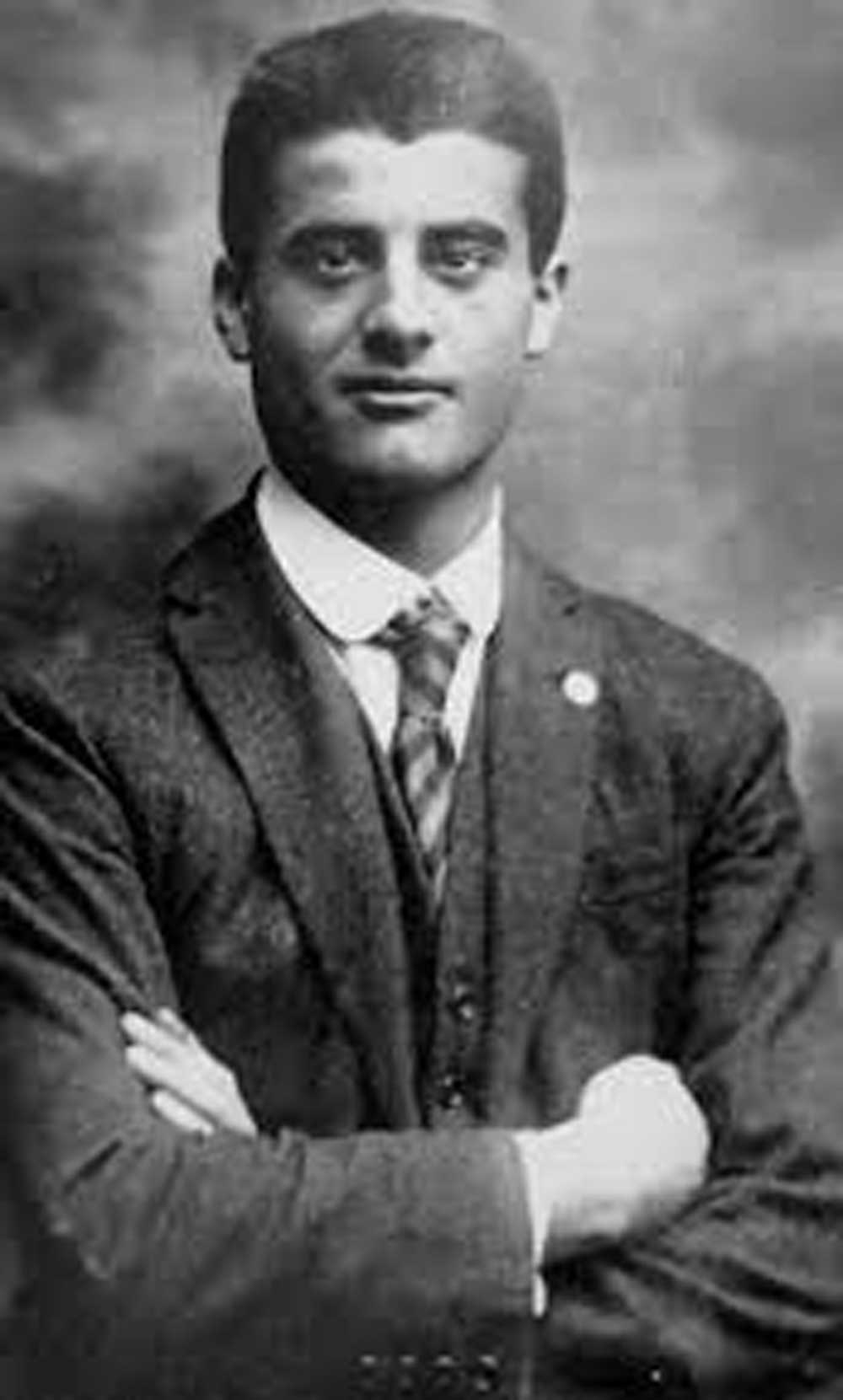
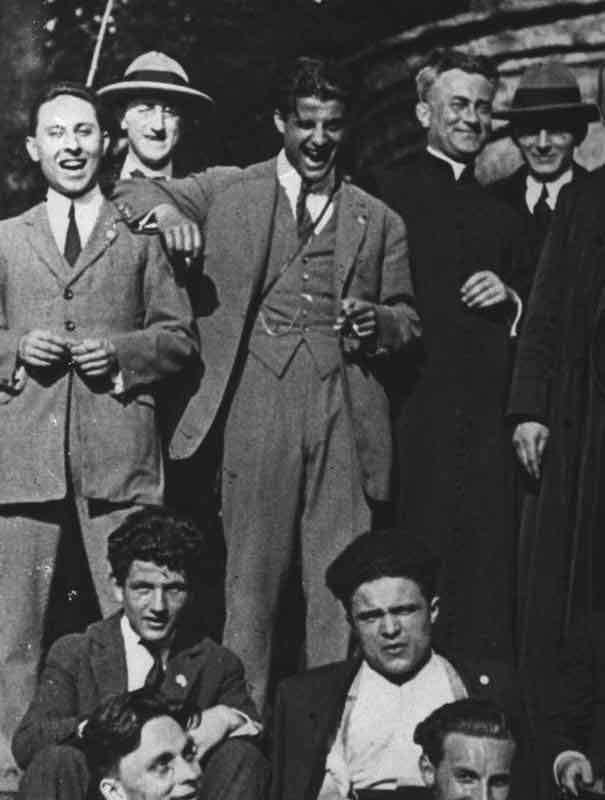
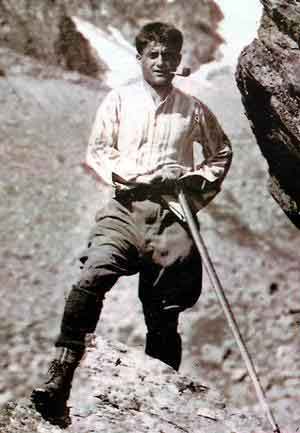
Blessed Pier Georgio Frassati will be declared a Saint by Pope Leo XIV on September 7th, 2025. A second miraculous healing attributed to his intercession was recognized by Pope Francis in a decree on Nov. 25, 2024.
Editors note: To be declared a saint in the Catholic Church, two miracles are generally required, attributed to the intercession of the candidate after their death. (In the case of martyrs, only one miracle is needed). The process for becoming a saint involves beatification, where one miracle is proven, followed by canonization, which requires a second miracle.
The first miracle attributed to the intercession of Pier Georgio Frassati:
The healing of Domenico Sellan: Domenico was 40 years old in 1933 and suffering from a tubercular disease of the spine, was paralyzed and nearing death. A priest visited him on December 28, 1933, and brought him a small prayer card of Pier Giorgio (whose cause for canonization was opened soon after his death). Domenico was miraculously cured and lived another 35 years.
The second miracle attributed to the intercession of Pier Georgio Frassati:
The healing of Juan Gutierrez: Juan Gutierrez, 38, was a seminarian of the Archdiocese of Los Angeles at St. John’s Seminary in Camarillo, California. Juan tore his Achilles tendon while playing basketball with other seminarians in 2017.
The day after getting an MRI for his torn tendon, he became concerned about the long, painful recovery as well the expenses that would be incurred. Juan headed for the seminary chapel “with a heavyheart”.
As he prayed, Juan felt inspired to make a novena to Pier Giorgio Frassati. A few days into the novena, Gutierrez went into the chapel to pray when nobody was there. As he prayed, he recalled feeling an unusual sensation around his injured foot.
“I was praying, and I started to feel a sensation of heat around the area of my injury. I honestly thought that maybe something was catching on fire, underneath the pews,” Juan recalled at a press conference on Dec. 16, 2024. Juan remembered from his experiences with the charismatic renewal movement that heat can be associated with healing from God. He found himself gazing at the tabernacle, weeping.
“That event touched me deeply,” Juan said.
He was not only touched spiritually, but he was also healed physically. Incredibly, he was able to walk normally again and no longer needed a brace!
Juan was ordained a priest for the Archdiocese of Los Angeles in June 2023 and is now Father Juan Gutierrez.
The Conclave to elect a new Pope after the passing of Pope Francis:
After a Pope dies, we enter a period called the interregnum (Latin for “between reigns“). During the interregnum, we have no Pope and a chain of events begins to elect a new Pope. All Cardinals under the age of 80 are summoned to Rome to begin the process of electing a new Pope in what is called a Conclave. The word “conclave” is a Latin noun dating back to ancient Rome meaning a locked room, typically used to store valuables or imprison someone; and indeed, the Cardinals are in a locked room (the Sistine Chapel) during deliberations and voting.
The history of Papal Conclaves:
Far from what we see today, from the Apostolic Age until 1059, the Pope, like other bishops, was chosen by the consensus of the clergy and laity of the diocese. In 1059, the body of electors was more precisely defined, when the College of Cardinals was designated the sole body of electors.
The 1268–71 papal election in Viterbo, Italy (from November 1268 to September 1271), following the death of Pope Clement IV, was the longest papal election in the history. locals became frustrated with the prolonged election and decided to remove the roof of the building where the cardinals were locked up. This was done to pressure them into a decision. The cardinals were already confined, fed only bread and water, and the roof removal was a final push to speed up the process.
The location of the Conclave was not always fixed: the Conclave of 1314-16 was held in France, and a century later, the Conclave of 1415-17 was held in Germany.
Papal conclaves, as a legally mandated process, officially began after that in 1274 in Viterbo with Pope Gregory X’s bull Ubipericulum. Prior to this, although papal elections had been held under similar circumstances, this was the first time such a formal requirement was introduced.
The conclave typically begins between 15 to 20 days after the pope’s death. In this case, the Conclave began on May 7, 2025, following the conclusion of the Novemdiales Masses where we prayed for the eternal repose of the late Pope Francis.
The photos shown below were released by the Vatican on May 5 showing that the preparations were complete for the Conclave to begin.
Historically, most conclaves last a few days, although the longest in history started in 1268 and lasted two years and nine months. After several rule changes to speed up the process over time, the average length of a conclave since the beginning of the 20th century has been three days.
The Conclave to elect Pope Benedict XVI lasted two days, while the Conclave that elected Pope Francis was one of the shortest in history, lasting just over 24 hours, barely making it two days. The time record for the last 8 conclaves is as follows:
•1922 – Pius XI: 5 days
•1939 – Pius XII: 2 days
•1958 – John XXIII: 4 days
•1963 – Paul VI: 3 days
•1978 – John Paul I: 2 days
•1978 – John Paul II: 3 days
•2005 – Benedict XVI: 2 days
•2013 – Francis: 2 days
Of course, this is not to say that we will see a short conclave this time….it all depends upon the dynamics involved. Our best guess is 3-4 days…but our guess is as good as yours (actually, yours is probably better)
The Conclave process explained:
Marking the beginning of the Conclave, a special Mass is held in the morning in Saint Peter’s Basilica. After Mass, the cardinal electors will gather inside the Sistine Chapel, which has overseen all papal conclaves since 1858. The conclave will officially begin when the words “extra omnes” (Latin for “everybody out”) are said by the master of the papal liturgical celebrations. This expels everyone but voting cardinals from the Sistine Chapel. Per tradition, the cardinals are cut off from the outside world, including televisions, phones, computers and newspapers, which certainly fits in with the definition of “Conclave”.
The voting process at the 2025 conclave:
Most of the Cardinal-electors do not know each other (except for a few well-known officials)…in fact, they wear name tags for identification. So the time before voting becomes a brief opportunity for some of them to exchange viewpoints and get to know each other better.
There was no set day for the voting to begin; however,
Image courtesy OSVnews.com
Cardinals vote by writing on a piece of paper headed “Eligo in summen pontificem,” Latin for “I elect as supreme pontiff.” Ballots are then stuffed into an urn and counted. To validly elect a new Pope, a two-thirds majority of the electors that are present is required. If the total number of electors is not evenly divisible by three, an additional vote is necessary.
If you are looking for announcements, bear in mind the time difference between Rome and where you live. Rome time is GMT +2. So, for example, New York is GMT -4. and therefore 6 hours ahead of Rome time. (7:45 am in Rome is 1:45 pm in New York).
Three cardinals delegated as scrutineers count the ballots, ensure everyone has voted, each make a count, and then burn the ballots. A two-thirds majority is required for a cardinal to be named the new pope.
All eyes will be on the chimney on the roof of the Sistine Chapel:
Interestingly, the slim metal chimney is not a permanent part of the chapel and is only placed on its roof as a Conclave begins.
It is connected to two stoves..one stove used for the black smoke and one used for the white smoke.
After each vote in a conclave, if no clear winner has emerged, black smoke is released from the chimney, visible from St. Peter’s Square.
This signals that the Cardinals have not yet reached a decision and another vote will be held.
After the first day, four votes will be taken each day, twice in the morning and twice in the afternoon. Times are often shown as GMT (Greenwich Mean Time..or UTC); however times below are Eastern Standard Time in the U.S. (remember, Rome is 6 hours earlier than Eastern Standard Time. So if, for example, you live in the U.S. you will probably get the results of the final vote of the previous day along with your morning coffee…have we confused you yet?
First vote: 3:30 a.m. (9:30 am Rome Time)
Second vote: 6:00 a.m. (noon Rome time) Smoke is released for the votes 1 and 2.
Third vote: 10 a.m. EDT (4:00 p.m. Rome time)
Fourth vote: 7 p.m. EDT (1:00 a.m. following day Rome time) smoke is released for votes 3 and 4.
Although there can be four votes per day after the first day, smoke is only released twice per day, as ballots from each session (morning and afternoon) are burned together…unless, of course a new Pope has been elected.
White smoke is released when a new pope has been chosen.
At this time, the crowds in Saint Peter’s square usually erupt in to applause…and millions of Catholics around the world wait in anticipation to see who has been elected.
Just to add to the confusion for those not familiar with time zones, UTC is equivalent to GMT (Greenwich Mean Time); however, their measurements differ: GMT is measured from midday, whereas UTC is measured from midnight. UTC is the legal basis of time in the world. Not worth worrying about, in our humble opinion.
Latest Results of the 2025 Papal Conclave:
There was no set day for the voting to begin; however, on the afternoon of the first day (May 7) there was only one vote taken, and black smoke signaled that no consensus had emerged.
Black smoke rose from the chimney over the Sistine Chapel at 11:50 am (Rome time) on Thursday morning, May 8, signalling the second ballot of the first full day of the conclave – and the third ballot overall – did not elect a pope.
Black smoke again rose from the chimney on Thursday May 8 at 11:50 am (Rome time), signalling the second ballot of the first full day of the conclave has failed to elect a new pope.
We have a Pope!
On Thursday May 8, white smoke emerged from the Sistine Cbapel and we heard the words “Habemus Papam”
Our new pope is Robert Francis Prevost, who has taken the name Pope Leo IV.
Once a new Pope has been elected:
The man elected then goes in to “The Room of Tears” or “Crying Room”, a private antechamber within the Sistine Chapel where a newly elected Pope first dons his papal cassock. As you can see from the photo, there is a variety of cassocks and shoes available to fit the new Pope regardless of his measurements. You can read more here.
It’s called “The Room of Tears” because when Leo XIII was elected Pope in 1878 at age 67, he initially felt too old for the job and wept. Despite his concerns, he went on to live a long life, becoming the second-oldest Pope ever and dying at 93. The newly elected Pope often experiences the same overwhelming emotions, both joy and the weight of their new responsibility, and may shed tears in this space.
Shortly thereafter, French Cardinal Dominique Mamberti, who serves as the Prefect of the Supreme Tribunal of the Apostolic Signatura and has been selected as Protodeacon, will get to announce “”Habemus Papam” − We have a pope − from the balcony of St. Peter’s Basilica. The new pontiff then goes out onto the balcony and blesses the city of Rome and the entire world.
Who will be voting in the Papal Conclave?
This is an ever-changing story leading up to the start of the Conclave, so please let us know if you have any updates.
The geographic representation is still primarily European, which is represented by 53 Cardinal electors (some of whom head Dioceses and Archdioceses in non-European countries, or serve as Apostolic Nuncios abroad or in the Curia), with Italy at 19, followed by France with 6 and Spain with 5.
Among non-European Cardinal-electors there are 37 Cardinals from the Americas, 23 from Asia, 18 from Africa and 4 from Oceania.
As of May 5, 2025, there are 252 cardinals, of whom 135 are eligible to vote in a conclave to elect a new pope. Cardinals’ eligibility is based on their age on the date of the pope’s death. According to Universi Dominici Gregis, (Pope Saint John Paul II’s Apostolic Constitution governing papal elections §33), “cardinalswho have not yet reached their80th birthday on the day the Apostolic See becomes vacant arefully eligible to participate in the conclave and to cast their vote for the new pope” .
The oldest cardinal-elector is Cardinal Carlos Osoro Sierra, the archbishop emeritus of Madrid. He is 79 years old, and he turns 80 on May 16, 2025. Had he been born just under a month earlier, he would have been too old to enter the conclave.
In an unusual turn of events ahead of the 2025 conclave, the official ages of two African cardinals: John Njue of Kenya and Philippe Ouédraogo of Burkina Faso, were recently revised in the Vatican’s official yearbook, making both eligible to participate in the election of the next pope. This was due to errors in their respective countries’ birth records. However, following a review and submission of new documentation, their dates of birth were corrected, effectively “rejuvenating” them (we like the way the Vatican names things! Wish we could do it to ourselves at times) and restoring their right to enter the Sistine Chapel as electors.
However, not all of these Cardinals will be present at the Conclave and therefore will not be voting.
Cardinals that are eligible to vote but will not be voting in the Conclave:
There are 135 Cardinals under the age of 80 who are eligible to vote; however, this number has been reduced by 2 as of now.
Cardinal Antonio Cañizares Llovera (Spain), seen as an arch-conservative will not take part in the upcoming conclave due to health concerns.
Cardinal John Njue (Kenya)will not travel to Rome, also due to health concerns.
Cardinal Angelo Becciu (Italy), the cardinal at the heart of the Vatican’s “trial of the century” announced on April 29 that he would obey the will of the late Pope Francis and was withdrawing from participating in the upcoming conclave to elect a new pope for “the good of the church.” However, we do not have confirmation of the fact that he is not in attendance.
There were false reports circulating that Cardinal Robert Sarah (Guinea) is not eligible to vote in the upcoming conclave due to his age; however, Cardinal Sarah will only turn 80 years old on June 15, 2025. Therefore, Cardinal Sarah, at age 79, iseligible to vote in the conclave (he is also considered “papabile”…..a potential candidate for the papacy).
Another arch-conservative, Vinko Cardinal Puljić (Bosnia & Herzegovina) was erroneously reported as not taking part, but has since confirmed that he will take part in the Conclave. Originally, it was reported that he would need to remain at Santa Marta; three cardinals would leave the Sistine Chapel for each vote to go to Santa Marta to collect his ballot, perhaps slowing down the vote count (although we can’t see that as much of a time-consuming task). As of June 5, he has announced that he will be joining the Cardinals in the Sistine Chapel rather than voting from Casa Santa Marta.
One participant (although not eligible to vote) will be Hong Kong’s outspoken Cardinal Joseph Zen, Cardinal Zen had his passport confiscated in 2022 as a result of his controversial arrest under a Beijing-imposed national security law. He has now been allowed to leave the southern Chinese city to attend Pope Francis’ funeral in Vatican City. Zen, a 93-year-old retired bishop, will not be eligible to vote. He is among the critics in recent years who have said the Vatican’s agreement with Chinese authorities on the appointment of bishops betrays pro-Vatican Chinese Catholics. He has also criticized Secretary of State Pietro Parolin, the official charged with negotiations with Beijing, as a “man of little faith.” With Cardinal Parolin being one of the contenders to replace Pope Francis, that makes for interesting dynamics.
The College of Cardinals announced on April 30 that all 133 Cardinal electors participating in the upcoming conclave have the right to vote for the new Pope. The above information may now be incorrect and we will try to get the exact number.
Also of interest is the fact that Cardinal Chibly Langlois, bishop of Les Cayes, will be the first Haitian prelate in the Church’s history to participate and vote in a papal conclave.
Needless to say, there was much speculation over several days as to whom would be selected….and history tells us that most, if not all, of the speculation was wrong.
Anyone trying to handicap the outcome should have remembered that Jorge Mario Bergoglio was considered too old to be elected pope in 2013 at age 76, and that Karol Wojtyla wasn’t on any front-runner lists going into the 1978 conclave that elected him Pope John Paul II. And, of course, the oft-repeated expression: “He who goes in to a Conclave as Pope, comes out a Cardinal“, suggesting that cardinals who are considered front runners or favorites are often surprisingly not chosen. So, we’re not placing any bets!
For what it’s worth, 108 of the electors were appointed by Pope Francis, 22 by his predecessor Pope Benedict and five by Pope John Paul II. You can read into that anything you wish….but, again, we’re taking no bets!
Where the Cardinals were housed during the Conclave:
The Cardinals spend the Conclave housed in private rooms in the Domus Marthae Sanctae (Martha’s House) — essentially a residence hotel in the Vatican with dining facilities that usually houses visiting clergy and laity. As noted above they are cut off from the outside world. Wouldn’t we love to listen in to the conversations over dinner?
Below is the Last Will and Testament of Pope Francis, as published by the Vatican:
Miserando atque Eligendo
In the name of the Most Holy Trinity. Amen.
As I sense the approaching twilight of my earthly life, and with firm hope in eternal life, I wish to set out my final wishes solely regarding the place of my burial.
Throughout my life, and during my ministry as a priest and bishop, I have always entrusted myself to the Mother of Our Lord, the Blessed Virgin Mary. For this reason, I ask that my mortal remains rest – awaiting the day of the Resurrection – in the Papal Basilica of Saint Mary Major.
I wish my final earthly journey to end precisely in this ancient Marian sanctuary, where I would always stop to pray at the beginning and end of every Apostolic Journey, confidently entrusting my intentions to the Immaculate Mother, and giving thanks for her gentle and maternal care.
I ask that my tomb be prepared in the burial niche in the side aisle between the Pauline Chapel (Chapel of the Salus Populi Romani) and the Sforza Chapel of the Basilica, as shown in the attached plan.
The tomb should be in the ground; simple, without particular ornamentation, bearing only the inscription: Franciscus.
The cost of preparing the burial will be covered by a sum provided by a benefactor, which I have arranged to be transferred to the Papal Basilica of Saint Mary Major. I have given the necessary instructions regarding this to Cardinal Rolandas Makrickas, Extraordinary Commissioner of the Liberian Basilica.
May the Lord grant a fitting reward to all those who have loved me and who continue to pray for me. The suffering that has marked the final part of my life, I offer to the Lord, for peace in the world and for fraternity among peoples.
The Sanctuary of Our Lady of Lourdes in France has officially recognized the 72nd miracle of Lourdes: the healing of Antonietta Raco, a 67-year-old Italian woman diagnosed with a rare, progressive, and incurable neurological disease that affects movement, speech, and swallowing.
During a pilgrimage to Lourdes in 2009, she experienced a sudden and complete recovery, particularly after visiting the baths.
The cure took place in 2009…why was it just recognized in 2025?
The Lourdes miracle approval process involves a medical investigation by a committee of specialists, followed by an ecclesiastical review by local Church authorities. The process is rigorous and thorough, ensuring that claims of miracles are carefully evaluated against medical standards before being declared supernatural by the Church
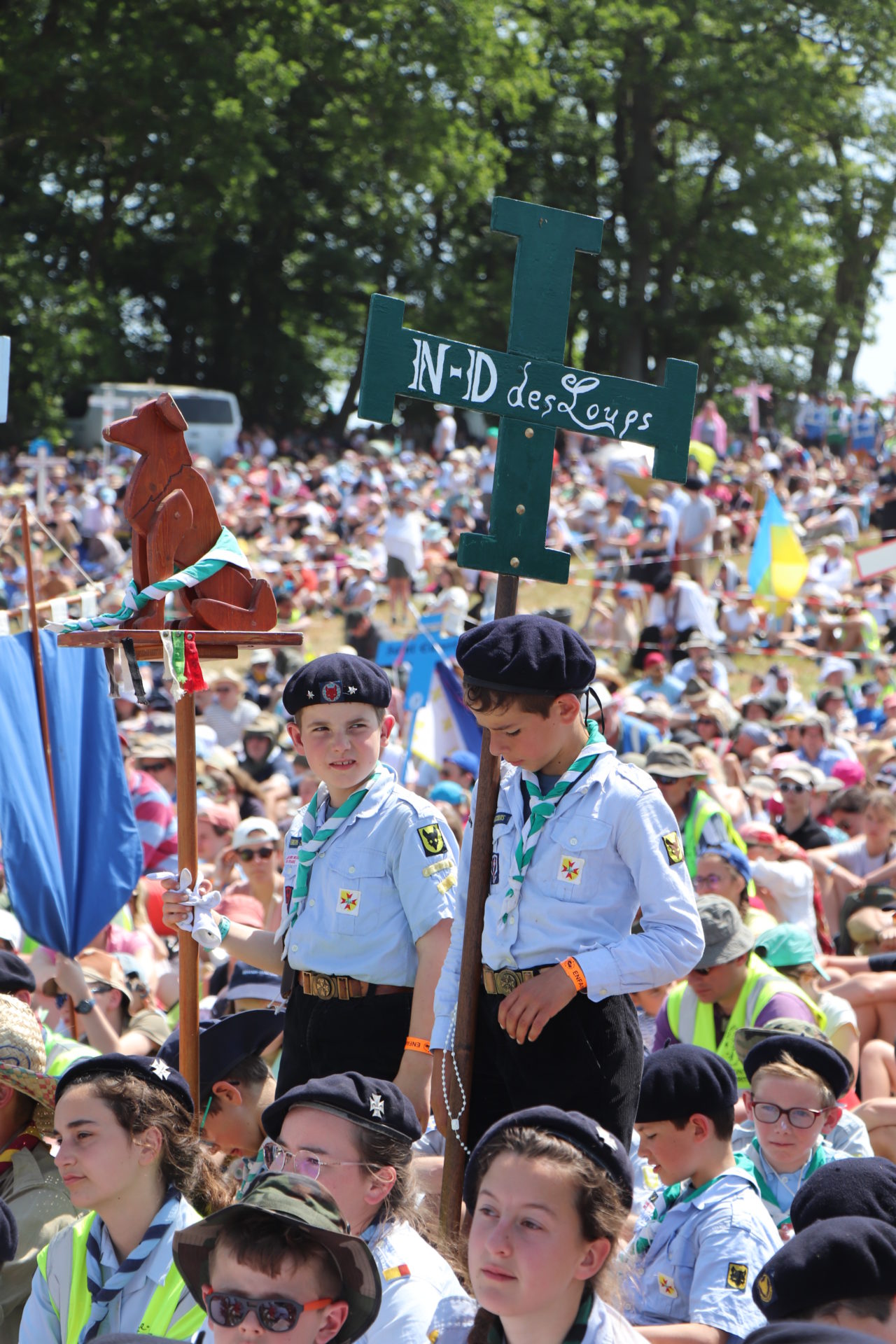
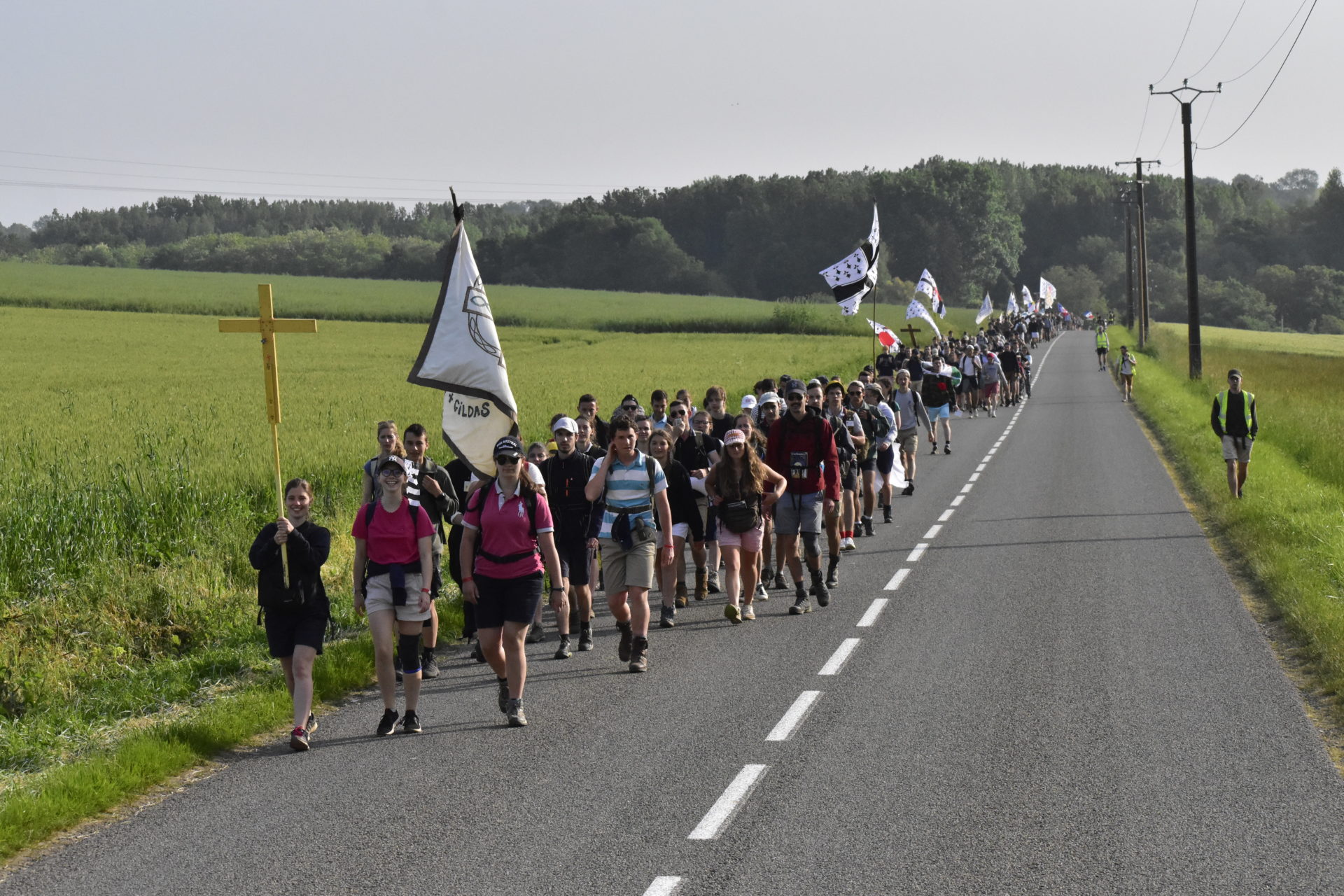
The Paris-Chartres Pilgrimage occurs every year on the Saturday before the Feast of Pentecost in early summer. Although primarily for young people, it is a multi-generational, multi-national gathering of Catholics who draw closer to God through the centuries-old act of pilgrimage. The modern, annual three-day Pentecost pilgrimage from Paris to Chartres, often associated with the Latin Mass revival, was established in 1983. The walk is roughly 62 miles over 3 days—beginning at daybreak on the Saturday before Pentecost, and ending with an afternoon mass on the Monday after Pentecost.
The Chartres Pilgrimage Route:
Known as the Pèlerinage de Chrétienté (Pilgrimage of Christendom), organized by the association Notre-Dame de Chrétienté, it is also widely known as the Chartres Pentecost Pilgrimage, taking place annually over the Pentecost weekend. The trek takes 10,000 pilgrims or more from Paris’ Church of Saint-Sulpice at 6 a.m. on June 4 and the journey of faith and foot takes pilgrims through the French countryside to the Cathedral of Notre Dame in Chartres (the pilgrimage used to start at Notre Dame de Paris, but since the fire at Notre Dame in 2019 the starting point has been changed).
Note: In the face of the increase in demand and the logistical limitations of the main route, in 2026 the organization Notre-Dame de Chrétienté announced the creation of an alternative itinerary under the name of “ruta de Jerusalén”. This new route, approximately 43 miles (70 kilometers), which will be more accessible without renouncing the essential elements of the pilgrimage: prayer, community life, and the spirit of sacrifice. The initiative will allow more faithful to fully participate in these days of grace.
Pilgrims are organized into groups of 20-60 people, that are referred to as “chapters”. Participants brave the weather, blisters, and humble food and accommodations as an act of faith and an act of reparation in these modern times.
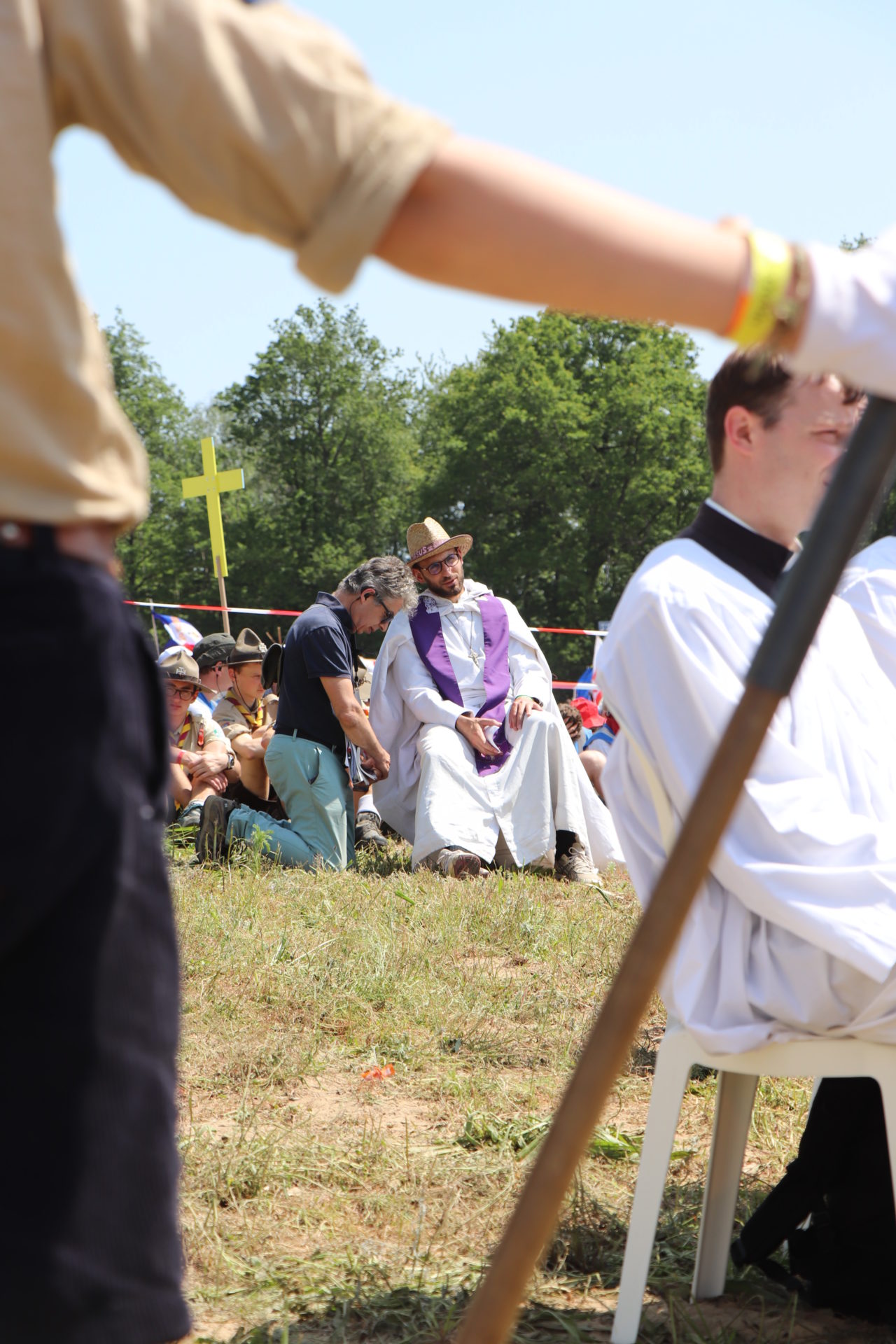
There is be Solemn Mass every day in the Traditional Roman Rite. Those who join the pilgrimage will have the opportunity to sing and pray in both English, French, and Latin.
On the way of the pilgrimage route the French have the venerable custom of singing the Rosary in French.
The pilgrimage begins on the morning of the Vigil of Pentecost, with Mass. The following day, the Solemnity of Pentecost, Solemn Pontifical Mass will be sung in the French countryside. The concluding Mass will be celebrated the afternoon of Monday, June 9, Pentecost Monday, in Chartres Cathedral.
The theme of this year’s pilgrimage is For our Holy Mother the Church.
It is reported that a record number of pilgrims (approximately 16,000) registered for the pilgrimage in 2025.
Click here for the official Chartres Pilgrimage website in English.
World Chess names Saint Teresa of Avila as Patron Saint of Chess
In a historic moment for the global chess community, World Chess in March 2025 officially introduced Saint Theresa of Avila as the Patron Saint of Chess, bringing the game into a centuries-old tradition of sports and cultural patronage.
Chess is one of the world’s oldest and most intellectually demanding games, World Chess has discovered and now formally introduced St. Teresa of Avila as the Patron Saint of Chess, a move that acknowledges the game’s deep historical and cultural significance—especially in Catholic countries where chess has been a cornerstone of intellectual and social life for centuries.
Saint Teresa of Avila was celebrated as patron saint of chess for years, but this announcement is the first formal recognition of a saint associated with World Chess, placing chess within a broader historical, religious, and cultural framework. We are not talking Sainthood with a capital “S”, since she is already a Saint in the Catholic Church; but rather in a more worldly sense.
“Checkmate” by Joaquín María Herrer y Rodríguez
Saint Teresa herself used chess as a metaphor for intellectual and spiritual growth, writing that success in life, much like success on the board, depends on careful planning, patience, and understanding long-term consequences. Her teachings align closely with the structured thinking and problem-solving skills that make chess one of the most respected mind sports in the world.
This recognition is particularly significant in Catholic-majority countries, where chess has long been a respected intellectual pursuit. Nations such as Spain, Italy, Poland, Argentina, and the Philippines have deep-rooted chess traditions, with strong federations, legendary grandmasters, and vibrant local scenes that have produced world-class players. The introduction of St. Teresa of Avila as chess’s patron saint further strengthens the cultural connection between the game and Catholic heritage.
“Chess has shaped history, from royal courts to Cold War diplomacy, but in many Catholic countries, it has also been an essential part of education, philosophy, and social life,” said Ilya Merenzon, CEO of World Chess. “Recognizing St. Teresa of Avila as the Patron Saint of Chess is an acknowledgment of the game’s profound intellectual and cultural role, especially in the nations where it has been played for centuries.”
About World Chess:
World Chess is the leading chess company that is developing and reinventing chess for the modern consumer — more than 600 million of them, combining tradition and innovation to create experiences that engage.
To mark the occasion, World Chess is launching a series of initiatives, including:
Official iconography of St. Teresa of Avila as the Patron Saint of Chess
A collector’s edition chess set and first edition of the official icon
A global tournament series in her honor, bringing together top players and rising talents
Cultural and academic discussions on chess’s role in philosophy, history, and education
With chess experiencing a resurgence in popularity—spurred by online platforms, streaming, and mainstream cultural interest—this recognition further cements its status as one of the most enduring intellectual pursuits in history.
About World Chess
World Chess is a global leader in chess innovation, tournaments, and cultural initiatives. By organizing elite competitions, developing new formats, and elevating chess as both a sport and an intellectual pursuit, World Chess is shaping the future of the game. The company’s shares are traded on London Stock Exchange: LSE:CHSS.