Home » Uncategorized » Page 2

Funeral of Pope Francis set for April 26

According the Holy See Press Office,  here are the details of the funeral of Pope Francis:

The 88-year-old pontiff had been well aware of his fragile state, especially in view of his recent illness. As early as 2015, Pope Francis had expressed the desire to be buried in the Basilica of Saint Mary Major (Santa Maria Maggiore), a fifth-century church in Rome dedicated to the Blessed Virgin Mary. He was so devoted to Mary and her basilica that after each of his more than 100 trips abroad, he would visit it after returning to Rome to pray and meditate.

No pope has been buried in Saint Mary Major since the 17th century, when Pope Clement IX was laid to rest there.

The funeral rites take place in three parts, called stations:

The first Station: certifying the death

This takes place in the pope’s private chapel, after medical professionals have certified his death. Until recently, this stage had taken place at the pope’s bedside.

After the body lies in rest in the chapel, the cardinal serving as the pope’s Camerlengo — the pope’s chief of staff — will make the arrangements for the funeral. He is also tasked with running the Vatican until a new pope is elected. The current Camerlengo is Cardinal Kevin Joseph Farrell, appointed by Francis in 2019.

As has been done for centuries, the Camerlengo will formally call the deceased pope by the full name given to him when he was baptized as an infant — Jorge Mario Bergoglio.

Another ancient rite will also take place after the declaration of the pope’s death: the defacing of the pope’s ring. Each pope wears a custom-made ring with an engraved image of a man fishing from a boat, hearkening back to the gospel of Matthew, where Jesus calls St. Peter a “fisher of men.” This Fisherman’s Ring, with the name of the current pope engraved over the image, could act as a seal on official documents. The Camerlengo will break Francis’ ring and smash the seal with a hammer or other instrument to prevent any other person from using it.

The pope’s apartments will also be locked, with no one allowed to enter; traditionally, this was done to prevent looting.

Translation of the body of Pope Francis:  Cardinal Kevin Farrell, Camerlengo of the Holy Catholic Church, presided over the rite of translation of the body of Pope Francis on April 23, which began at 9:00 AM with a moment of prayer.  The procession then passed through Santa Marta Square and the Square of the Roman Protomartyrs and exited through the Arch of the Bells into Saint Peter’s Square and enterd Saint Peter’s Basilica through the central door.

The Second station: Viewing the body

The deceased pope will be dressed in his simple white cassock and red vestments, then placed in a simple wooden coffin. While previous pontiffs, including the late Pope Benedict, have been buried in the traditional triple coffins made of cypress, lead and oak, Francis instead chose a simple wooden coffin lined with zinc. This will be carried in procession to Saint Peter’s Basilica, where the public viewing will take place for the next three days.

Saint Peter’s Basilica will remain open for the faithful who wish to pay their respects to the late Pope on Wednesday April 23 from 11:00 AM to midnight; on Thursday April 24 from 7:00 AM to midnight; and on Friday April 25 from 7:00 AM to 7:00 PM.

The pope’s body will be left in the plain, open casket during this viewing period in order to emphasize the pope’s humble role as a pastor, not a head of state. The earlier practice would have been to place the body on top of a tall raised platform, called a catafalque; this ended with the funeral of Pope Benedict XVI in 2022.

At Francis’ funeral, after the public viewing, a plain white cloth will be placed over the pope’s face as he lies in the oak coffin, a continuing part of papal funerals.

Pope Francis’ coffin to be sealed in rite on Friday evening.

Pope Francis’ coffin will be sealed during a liturgical rite held in St. Peter’s Basilica on Friday, April 25, at 8:00 PM.

Cardinal Kevin Farrell, Camerlengo of the Holy Roman Church, will preside at the Rite of Sealing of the Coffin of the late Pope Francis, ahead of the papal funeral on Saturday morning.  The liturgical rite will be attended by several Cardinals and Holy See officials.

This will mark the end of public viewing in St. Peter’s Basilica, which has seen tens of thousands of people pay their respects to the late Pope.

As his mortal remains lie in state, over 50,000 people have filed past the Altar of the Confession in the 24 hours since the Vatican Basilica opened to the faithful on Wednesday morning.

St. Peter’s Basilica remained open until 5:30 AM on Thursday, closing for an hour and a half before reopening at 7:00 AM.

At the Altar of the Confession, the Cardinal Camerlengo  presided over the Liturgy of the Word, at the conclusion of which the visits to the body of the Roman Pontiff commenced.

The coffin was sealed during the Rite of Sealing of the Coffin on Friday, April 25.

According to the Vatican News Service, The Office for the Liturgical Celebrations requested the presence of Cardinals Giovanni Battista Re, Pietro Parolin, Roger Mahony, Domenique Mamberti, Mauro Gambetti, Baldassare Reina, and Konrad Krajewski for the Rite of Sealing of the Coffin.

Those assisting the Rite also included Archbishop Edgar Peña Parra, Archbishop Ilson de Jesus Montanari, Monsignor Leonardo Sapienza, the Canons of the Vatican Chapter, the Ordinary Minor Penitentiaries of the Vatican, the late Pope’s secretaries, and others admitted by the Master of Pontifical Liturgical Celebrations, Archbishop Diego Ravelli.

The Funeral of Pope Francis:

The funeral Mass was celebrated on Saturday April 26 in front Saint Peter’s Basilica.   It was earlier thought that it would be inside due to cold weather, but with highs around 70°F (21°C) and there will likely be a large number of people assembled on the plaza.

Masses will continue to be said in Francis’ memory for nine days after his death — a period called the Novendialis. This ritual was inspired by an ancient Roman tradition prescribing a mourning period ending on the ninth day after a death.  The Novemdiales Masses will be held each day at 5:00 PM (GMT +2) in St. Peter’s Basilica, except for the Mass on Divine Mercy Sunday, April 27, which will take place at 10:30 AM in St. Peter’s Square.

Third station: Burial

Most popes are buried in the grottoes underneath Saint Peter’s, and since Pope Leo XIII’s burial at St. John Lateran in 1903, every pope has been buried at Saint Peter’s.

According to Francis’ wishes, as expressed in his last will and testament, his body was buried in the Basilica of Saint Mary Major,

After so many journeys from Rome to visit Catholic communities in countries across the globe, and so many visits to this basilica for prayer and meditation, It seems fitting that, at the end of his life’s journey, Francis would make one last trip to the church he loved so much to be laid to rest forever.

After a few final prayers and sprinkling of holy water, the coffin was placed in its final location inside the church. Only later will the area be opened to the public for prayers and veneration.

Home » Uncategorized » Page 2

FRANCE (Paris) Annual Paris to Chartres Pilgrimage

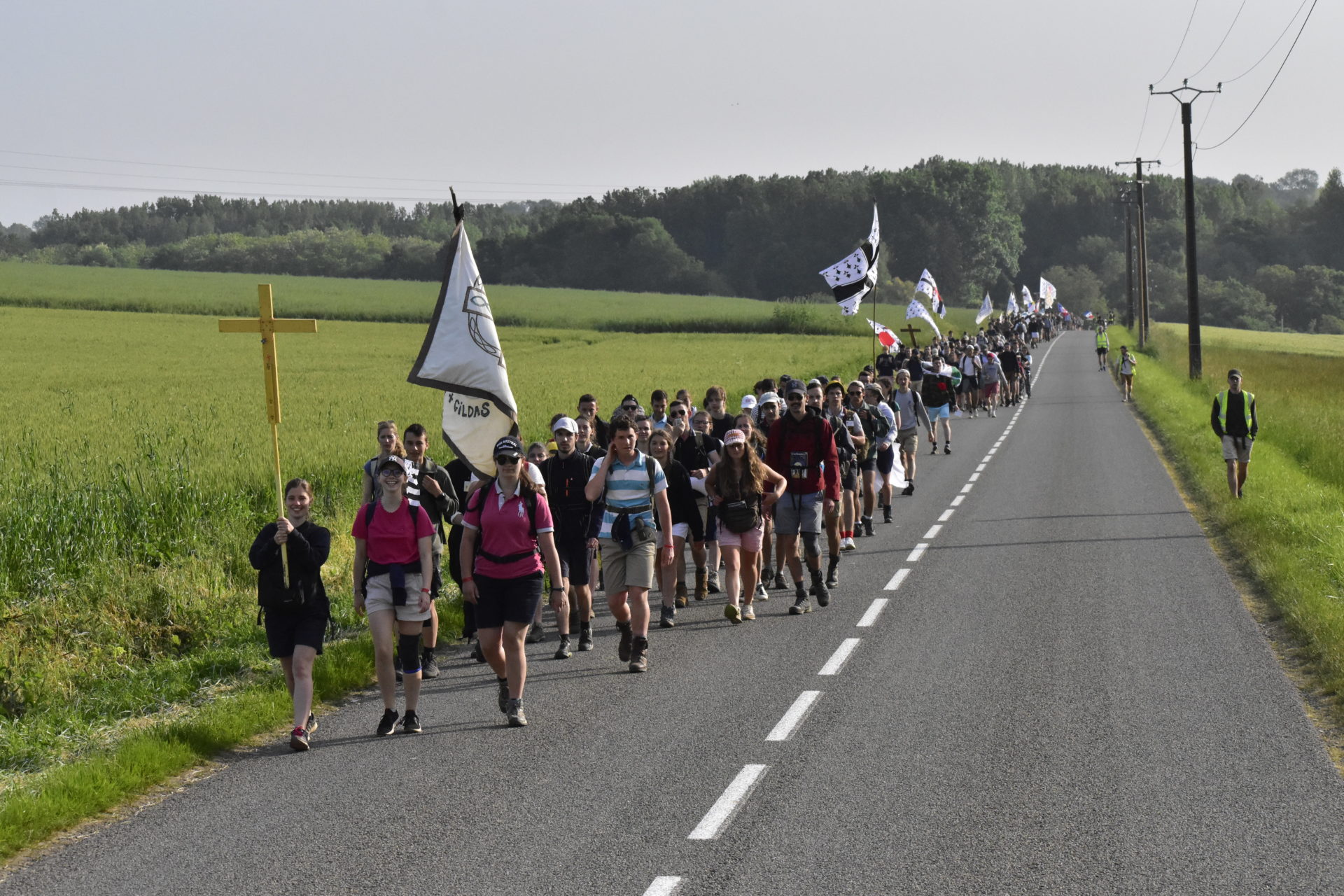
The Paris-Chartres Pilgrimage occurs every year on the Saturday before the Feast of Pentecost in early summer. Although primarily for young people, it is a multi-generational, multi-national gathering of Catholics who draw closer to God through the centuries-old act of pilgrimage. The modern, annual three-day Pentecost pilgrimage from Paris to Chartres, often associated with the Latin Mass revival, was established in 1983. The walk is roughly 62 miles over 3 days—beginning at daybreak on the Saturday before Pentecost, and ending with an afternoon mass on the Monday after Pentecost.

The Chartres Pilgrimage Route:

Known as the Pèlerinage de Chrétienté (Pilgrimage of Christendom), organized by the association Notre-Dame de Chrétienté, it is also widely known as the Chartres Pentecost Pilgrimage, taking place annually over the Pentecost weekend. The trek takes 10,000 pilgrims or more from Paris’ Church of Saint-Sulpice at 6 a.m. on June 4 and the journey of faith and foot takes pilgrims through the French countryside to the Cathedral of Notre Dame in Chartres (the pilgrimage used to start at Notre Dame de Paris, but since the fire at Notre Dame in 2019 the starting point has been changed).

Note: In the face of the increase in demand and the logistical limitations of the main route, in 2026 the organization Notre-Dame de Chrétienté announced the creation of an alternative itinerary under the name of “ruta de Jerusalén”. This new route, approximately 43 miles (70 kilometers), which will be more accessible without renouncing the essential elements of the pilgrimage: prayer, community life, and the spirit of sacrifice. The initiative will allow more faithful to fully participate in these days of grace.

Pilgrims are organized into groups of 20-60 people, that are referred to as “chapters”. Participants brave the weather, blisters, and humble food and accommodations as an act of faith and an act of reparation in these modern times.

There is be Solemn Mass every day in the Traditional Roman Rite. Those who join the pilgrimage will have the opportunity to sing and pray in both English, French, and Latin.

On the way of the pilgrimage route the French have the venerable custom of singing the Rosary in French.

The pilgrimage begins on the morning of the Vigil of Pentecost, with Mass. The following day, the Solemnity of Pentecost, Solemn Pontifical Mass will be sung in the French countryside. The concluding Mass will be celebrated the afternoon of Monday, June 9, Pentecost Monday, in Chartres Cathedral.

The theme of this year’s pilgrimage is For our Holy Mother the Church.

It is reported that a record number of pilgrims (approximately 16,000) registered for the pilgrimage in 2025.

Click here for the official Chartres Pilgrimage  website in English.

Home » Uncategorized » Page 2

Statue of Mystical Rose added to Vatican Gardens

From Vatican News Service regarding Mary, “Mystical Rose”:

The prefect of the Dicastery for the Doctrine of the Faith blessed a statue of Mary, “Mystical Rose”:
Statue of Rosa Mystica

Cardinal Victor Manuel Fernández, the prefect of the Dicastery for the Doctrine of the Faith, blessed a statue of “Mary, Mystical Rose” at the Vatican on Monday of Holy Week 2025.  The statue, donated by Pope Francis, was placed in a shrine close to the Sacrament Fountain in the Vatican Gardens.

This follows the decision last summer by the Dicastery saying there is no objection to devotion to Our Lady under that title.


Among those present for the blessing, in addition to Cardinal Fernández, were the two secretaries of the Dicastery for the Doctrine of the Faith, Archbishop John Joseph Kennedy and Fr Armando Matteo; as well as the secretary-general of the Governorate of Vatican City State, Archbishop Emilio Nappa.

A ‘green light’ for devotion to Mary, Mystical Rose:

Last July, the Dicastery released a decision, based on the new norms regarding alleged supernatural phenomena, granting the “nulla osta” authorizing public devotion to Mary under the title “Mystical Rose,” in connection with messages purportedly received between 1947 and 1966 by visionary Pierina Gilli.

The decision also permitted the dedication of churches and sacred places to Mary under this title, with the corresponding image.

The judgment of the Dicastery:

In a letter accompanying last July’s decision by the Dicastery, Cardinal Fernández wrote that one does not find “negative moral aspects or other critical aspects related to this spiritual experience” of Pierina Gilli. “Rather,” he said, “one can find several positive aspects that stand out in the messages as a whole.”


The reported  apparitions of Mary under the titles of “Mystical Rose” and “Mother of the Church”;

The apparitions are connected to the locality of Fontanelle, located south of the town of Montichiari in the Italian province of Brescia.

The visionary, Pierina Gilli, was born into a peasant family, and worked as a housekeeper and nurse in a hospital, leading a very simple life until her death in 1991 at the age of 80.

Her mystical experiences occurred over two different periods, the first dating back to 1947, when Our Lady is said to have appeared to Pierina, presenting herself under the titles “Mystical Rose” and “Mother of the Church.” On Mary’s white robe, Gilli says she saw three roses: one white, one red and one yellow, symbolising prayer, penance and suffering.

The second cycle of apparitions took in 1966 in Fontanelle. Here, on 13 May, a significant Marian date, Our Lady indicated a particular spring to Pierina as a place of purification and source of graces. As early as 1966, work began on building a sanctuary on the site, which took the form not of a church, but of an open amphitheater. On one side, there is a chapel for the celebration of the Holy Mass; on the other, a second, smaller chapel surrounding the spring indicated by the apparition.

Click here to read more about the apparitions of the Blessed Virgin Mary as “Rosa Mystica” in Fontanelle, Italy.

Home » Uncategorized » Page 2

Catholic Travel: Where to go in 2025?

Reading the news headlines…or watching the news on TV, can in some cases just make the idea of foreign travel seem too dangerous, too difficult, or simply not worth the effort.  It becomes easy to put off visiting these places….just wait until conditions improve, you tell yourself.

But this is not the case.

In fact, the future of Catholic travel appears to be vibrant and evolving, driven by a combination of spiritual renewal, cultural exploration, and emerging global trends.

This is particularly evident in light of the  Jubilee Year 2025, which began on Christmas Eve 2024 and will conclude on January 6, 2026 .

This special event, occurring every 25 years, traditionally draws millions of pilgrims, not only to Rome, but to many other holy sites worldwide. The anticipation is already sparking increased interest in pilgrimage travel, with opportunities for plenary indulgences and a focus on Eucharistic revival, especially in places like Italy, home to notable Eucharistic miracles such as Lanciano and Bolsena-Orvieto. Travel organizations are preparing for this surge by offering tailored itineraries, suggesting that 2025 could see a significant uptick in Catholic pilgrimages.

Beyond the Jubilee, the broader trend of religious tourism is gaining momentum.

Pilgrimage travel is no longer just about traditional destinations like Rome, Lourdes, or the Holy Land. Emerging destinations such as Poland (with its rich Catholic heritage tied to St. John Paul II and Divine Mercy) and Lithuania are attracting attention.

And, there are many increasingly popular destinations in the U.S. such as The National Shrine of Our Lady of Champion, formerly Our Lady of Good Help, the only Vatican-approved Marian apparition site in the U.S., tied to 1859 visions. Its profile has risen with recent Eucharistic pilgrimages (like the 2024 National Eucharistic Pilgrimage), and its rural serenity could attract more Catholics in 2026 seeking authentic, lesser-known holy sites.  Likewise the The National Shrine of St. Elizabeth Ann Seton in Emmitsburg, Maryland is bound to attract thousands.

Additionally, unique experiences like walking the Camino de Santiago or exploring lesser-known shrines are appealing to Catholics seeking both spiritual depth and adventure. The integration of food, culture, and faith— tours in Italy or Portugal—also hints at a diversification of Catholic travel offerings.

Safety and accessibility are improving in key regions, enhancing prospects. For instance, the Holy Land, despite past conflicts, is showing signs of recovery with resumed flights and reopened sites, making it more feasible for pilgrims to return. Similarly, restrictions in popular European cities like Venice and Rome, aimed at reducing overcrowding, could benefit Catholic travelers by offering a more intimate experience at holy sites.

Challenges remain, such as geopolitical instability or economic barriers, but the resilience of Catholic travel is evident. With priests accompanying groups, daily Mass, and a focus on small, meaningful journeys, the experience is becoming more personalized. The future likely holds a blend of tradition and innovation—more pilgrims, diverse destinations, and a deeper intertwining of faith with global exploration.

Pilgrims at St Peter's BasilicaOur thoughts?  It’s going to be crowded….for exampleRome normally attracts some 35 million tourists annually…and a Jubilee Year will probably bring that number up considerably.  Admittedly, these are not all Catholic pilgrims, but they will likely be visiting many of the same places that you have on your itinerary.

One way to overcome some of these challenges is to book with a reliable tour company, guaranteed admission to many popular sites and some hard-to-enter places as well.  And, of course, hotel accommodations that suit your itinerary, so you won’t have to chase after hotel rooms in un-familiar cities (nothing is worse than being in a hotel outside your desired location),

For a great selection of Jubilee Year 2025 pilgrimages we suggest Select International Tours.


Home » Uncategorized » Page 2

Jubilee Year 2025…opportunity for a plenary indulgence

2025 will be a Jubilee Year, with an opportunity to get a plenary indulgence.

It was announced by Pope John Paul II at the end of the Great Jubilee (December 24, 1999 to January 6, 2001), that there will be a jubilee year every 25 years.   Therefore, the year 2025 will be a Jubilee Year, beginning on December 24, 2024 and ending on January 6, 2026.

What is a Jubilee Year?

A Jubilee Year is a special year of grace, in which the Catholic Church offers the faithful the possibility of asking for a plenary indulgence (the remission of sins for themselves or for deceased relatives). A bit different from the secular calendar, the Jubilee Year year starts on December 24.

The most well-known rite that starts the Jubilee Year is the opening of the Holy Door in Saint Peter’s Basilica.  Normally walled up, the door was opened at that time.

This was followed on successive days by opening the Holy Doors on the other 3 Major Basilicas: Saint John Lateran, Saint Paul Outside the Walls and Saint Mary Major.

These doors will remain open until the end of the Jubilee, when they are once again walled up.  Those walking through these holy doors will receive a plenary indulgence.

There are no diocesan holy doors; However, a person can make a pilgrimage to any cathedral to receive the same indulgence. Also, a bishop can designate certain types of shrines for the same indulgence.

You can find the official Vatican Jubilee Year 2025 website here.

If you plan to travel to Rome for the Jubilee Year, we suggest you check out the many pilgrimages being offered by Select International Tours.


Home » Uncategorized » Page 2

Do you know the tradition of the “Christmas Nail”?

One of the best things about Advent and Christmas is discovering the many varied traditions that families have passed down through the generations.  When you travel….whether locally or abroad….you will often find traditions that have endured for centuries.

SAtory of the Christmas NailOne of these traditions is the “Christmas nail”.   Supposedly resembling the nails used to attach Jesus to the cross, it is a reminder of the true meaning of Christmas….that the birth of Christ was subsequently followed by His crucifixion and then His resurrection.

It is fitting that the nail is placed on a tree….since He was crucified by hanging Him on a tree.

Many families put the Christmas nail near the center of the tree, to remind them that Christ should be at the center of their lives.  It is a great way to bring Christ back in to Christmas.

Get one for your family and start a new tradition.

Home » Uncategorized » Page 2

The only Catholic church in Gaza receives aid from the Vatican

The plight of Christians in the Holy Land….especially in Gaza, is dire.  The following article is courtesy of Vatican News Service:

As the Holy Land marked a grim first anniversary Oct. 7 of the Hamas attack on southern Israeli communities and subsequent Israel-Hamas war that has devastated the Gaza Strip, the papal almoner raised $35,000 in one afternoon from delegates to the Synod on Synodality and immediately sent it to Holy Family Parish in Gaza City.

“In addition to $35,000 donated by synodal delegates in one day, the Holy Father topped the sum with additional $32,000 and that same night the money was sent to the nunciature in Jerusalem,” Cardinal Konrad Krajewski, prefect of the Dicastery for the Service of Charity, told OSV News.
Advertisement

He asked synod members in Rome to give alms after their synodal session Oct. 7, a day of prayer, fasting and penance for peace in the Holy Land. Almsgiving “must make us suffer, must hurt us, because we give up what belongs to us in order to give to our neighbor who is in need or even about to die,” he said.

All funds collected in a “big, huge” basket in front of the synod hall were sent through the papal embassy in Jerusalem to Father Gabriel Romanelli, parish priest at Holy Family Parish, “whom the pope calls every day at 4 p.m.,” Cardinal Krajewski said.

Gaza Strip Holy Family Catholic Church
photo/courtesy Latin Patriarchate of Jerusalem)

Father Romanelli gathered the parish children that night to thank synod delegates for their generosity. In a video obtained by OSV News, he said that “with a little group” of children, representing over 500 people sheltering in the parish premises, he wanted to “thank the Holy Father, Pope Francis, the synodal fathers, for all you did to help, through the almoner, Cardinal Konrad.”  Father Romanelli was thankful for the “prayer, closeness and concrete help” because “everyone needs everything” in Gaza, he said in the video.

Cardinal Krajewski said he played the video to synod delegates Oct. 8 and they were “very moved,” seeing over 30 children and some parents with Father Romanelli in the middle, surrounded by his flock.

During an Oct. 7 Mass accompanied by recitation of the rosary and vespers for peace in the Holy Land, Cardinal Pierbattista Pizzaballa said in Jerusalem’s pro-cathedral that “what has happened and is happening in Gaza leaves us stunned and beyond understanding.”
Advertisement

But as “on one hand diplomacy, politics, multilateral institutions and the international community have shown all their weakness,” the Latin patriarch of Jerusalem said. “On the other, we have also been supported.”

Cardinal Pizzaballa stressed that “the Holy Father has repeatedly called on all parties involved to stop this drift, but he has also expressed human solidarity with our community in Gaza in concrete ways and has also given them concrete support.”

Cardinal Krajewski told OSV News that “in the Gospel there is no ‘I’ll help tomorrow’ — in the Gospel there is a ‘now,’ there is an urgency to help, and that’s exactly what needed to happen on Oct. 7,” he stressed. “They need our support now, not tomorrow,” he said, expressing happiness that the basket “filled up quickly” and he could send the funds to Jerusalem “that same evening.”
Advertisement

Pope Francis sent a letter to Catholics in the Middle East on Oct. 7, the day “the fuse of hatred was lit,” something that “did not sputter, but exploded in a spiral of violence.” Christians who decided to remain in the land “of which the Scriptures speak most often,” he said, are “sprouts of hope.” The pope thanked them for “wanting to remain in your lands” and “being able to pray and love despite everything.”

The pontiff told Catholics living through difficulties of war in the region that “the light of faith leads you to testify to love amid words of hatred, to encounter amid growing confrontation, to unity amid increasing hostility.”

“Pope Francis remembers about Gaza Christians every day. He calls every day but also, as we can see by this fundraiser, sends concrete help,” Cardinal Krajewski said.

“This is the position of the church — we don’t leave anyone behind — and even if we can’t be there physically, we are close and want to show it in every possible way,” the papal almoner said.

Amid the horrors of Hamas attack that saw 1,200 Israelis killed on Oct. 7 and 250 taken hostage and the subsequent Israel-Hamas war that to date has left over 42,000 Palestinians dead in the Gaza Strip, according to Gaza Health Ministry, Cardinal Pizzaballa said that “in such dramatic context, let us face it: This year has put our faith in a test. It is not easy to live in faith during these hard times.”

“The words ‘hope’, ‘peace’, ‘coexistence’ seem to us to be theoretical and far from reality. … But it is exactly here that our Christian faith must find a visible expression,” he said.

“We are called to think beyond the logic calculations, we cannot stop only at human reflections that trap us in our grief, without opening perspectives,” he said. “We are called to read these challenges in the light of the Word of God, a Word that accompanies and widen our hearts. And we have to continue doing so.”

The patriarch concluded, “In this time when violence seems to be the only language, we will continue to speak of and believe in forgiveness and reconciliation.

Here is our page describing Holy Family Church in Gaza.

Home » Uncategorized » Page 2

Don’t want to go to that country, “Too many Catholics there”

Watching Cardinal Dolan give the homily at Mass today at the National Eucharistic Conference, I want to paraphrase a joke he told:

A couple of guys, knowing he was a priest, decided to bait him.

They loudly exclaimed: “I wouldn’t want to go to Italy…too many Catholics there”.

“I wouldn’t want to go to Ireland…too many Catholics there”

The Cardinal replied:

Then go to hell…….there are no Catholics there!”


Home » Uncategorized » Page 2

Vatican approves apparitions of “Rosa Mystica”

According to Vatican News:

Based on new regulations, the Dicastery for the Doctrine of the Faith (DDF) has expressed its positive opinion regarding the devotion to Our Lady of Montichiari (Rosa Mystica) in northern Italy. This approval is conveyed through a letter to Bishop Pierantonio Tremolada, with the endorsement of Pope Francis

Praying at the statue of Rosa Mystica in Montichiari, Italy
Praying at the site of the apparitions of Our Lady of Rosa Mystica

The Dicastery for the Doctrine of the Faith has stated that it found no elements in the messages disseminated by Pierina Gilli that contradict the teachings of the Catholic Church on faith and morals. This declaration is included in a letter published on July 8, signed by the Prefect of the DDF, Victor Manuel Fernandez, and approved by the Pope. The letter addresses the devotion to Maria Rosa Mystica (‘Mary Mystical Rose’) and the messages that Pierina Gilli claims to have received from the Virgin Mary in 1947 and 1966. The letter highlights the positive aspects of these messages, while also noting some elements that require clarification to prevent misunderstandings.”

For the full report, click here.

Home » Uncategorized » Page 2

Sister Blessed Marie-Leonie Paradis, founder of the Institute of the Little Sisters of the Holy Family of Sherbrooke, will be declared a saint

Sister Blessed Marie-Leonie Paradis, founder of the Institute of the Little Sisters of the Holy Family of Sherbrooke, will be declared a saint on Oct. 20.

Born Virginie Alodie on May 12, 1840, in L’Acadie, Quebec, Blessed Marie-Leonie founded her institute to collaborate with and support the religious of Holy Cross in educational work, in 1880 in New Brunswick.

Today her sisters work in over 200 institutions of education and evangelization in Canada, the United States, Italy, Brazil, Haiti, Chile, Honduras, and Guatemala.

“She always felt a call to support priests in their ministry”, said Bishop Poitras, and “events led her to found a new community which was recognized in 1896 by the Bishop of Sherbrooke: the Little Sisters of the Holy Family.”

Mother Mary Leonia died on May 3, 1912, in Sherbrooke, Quebec, at the age of 72. She was beatified in Montreal on Sept. 11, 1984, by Saint John Paul II, during his visit to Canada.

Her body lies in Basilica-Cathedral of Saint Michael Cathedral in Sherbrooke, Quebec.

Source: Catholic News Agency